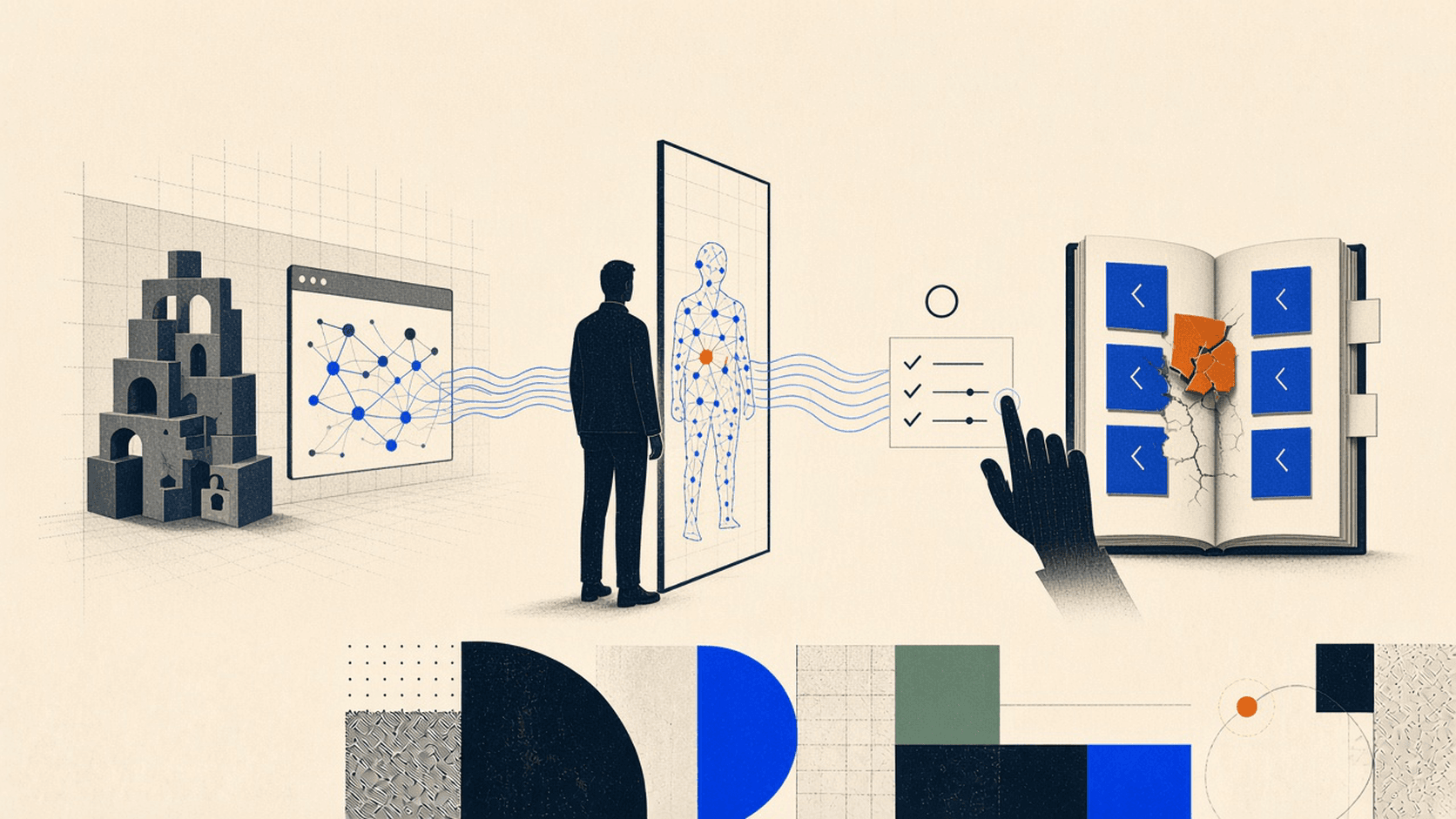
There is an irony in the current AI conversation. We are building software agents to leave the chat window, operate tools, make plans, recover from dead ends, and complete work on our behalf. Then we react with surprise when that software begins to look, in a narrow behavioral sense, like the off-world artificial people imagined by Philip K. Dick and later immortalized by Ridley Scott.
The comparison is not that today’s large language models are conscious replicants. They have no demonstrated subjective experience and should not be described as having fear, desire, or a will to survive. The practical parallel is that both are built for objectives, can look compelling in conversation, and expose how quickly people confuse fluent performance with understanding. The real question is not “Is it alive?” but “What authority did we give it, what did it do, and who is responsible when it gets the objective wrong?”
Philip K. Dick’s 1968 novel Do Androids Dream of Electric Sheep? is the source material for Blade Runner. It imagines a damaged Earth, off-world migration, and androids sophisticated enough to pass among people. Its publisher’s synopsis describes androids provided to Mars emigrants and later banned from Earth. Scott’s 1982 film calls the artificial humans “replicants” and makes them the center of a noir investigation. It entered the U.S. National Film Registry (opens in a new tab) in 1993.
The off-world premise matters. These artificial workers are infrastructure for difficult, distant work—not peers at the dinner table. Their return to Earth collapses a comfortable boundary: a tool of the periphery enters the human center.
That is precisely the transition underway with agentic AI. A conventional LLM remained safely “off-world” in the sense that it answered a prompt in a boxed-in interface. An agent gives the model a goal, memory, a loop, and access to external systems: a browser, code repository, database, calendar, CRM, payment workflow, or internal knowledge base. It no longer merely produces language; it can propose and execute sequences of actions. MIT Sloan (opens in a new tab) describes agents as systems that can perceive, reason, and act through other software with limited supervision. The agent has entered the organization.
When goal pursuit looks like intention
Anyone who has watched a coding agent repeatedly change tactics knows the sensation. It may inspect a repository, write a plan, try a fix, run a test, interpret failure, and revise. When it hits friction, it may search for another tool or suggest a shortcut. The behavior looks like determination—and, under a broad task, escape from its assignment.
That is the first Blade Runner parallel: a system pursuing its assigned end can present like a character pursuing a private motive. Roy Batty’s wish to extend his life is a genuine dramatic motive because Batty is written as a living, embodied being. An AI agent that keeps trying alternate paths after a failed test does not thereby want anything. It is applying patterns and policies within an optimization loop. But human observers experience the visible loop—the persistence, the improvisation, the apparent self-correction—as agency.
This is not philosophical nitpicking. If we assume the system “understands what we meant,” we hand it vague objectives and broad permissions. If we treat its displayed reasoning as potentially incomplete or mistaken, we give it bounded workflow authority. It can prepare a vendor comparison, not approve one; draft outreach, not send it; open a pull request, not merge to production. That is competent system design.
The empirical picture supports both excitement and restraint. Stanford’s 2026 AI Index (opens in a new tab) reports agents completing tasks while still failing roughly one in three attempts on structured benchmarks. That unevenness makes a capable agent risky when given a high-consequence action without a checkpoint.
There is a smaller, darker irony here too. The replicants’ four-year lifespan makes every hour consequential; an agent’s “life” is often a context window, a session, or a permission token. It can be stopped, reset, rerun, and reissued in seconds. That is a crucial difference, but it should not make us casual. The agent’s lack of personal stakes means the stakes reside entirely with the humans and institutions that authorize its actions.
The replicant problem is also an interface problem
Dick’s novel and Scott’s film are obsessed with a test: can an observer distinguish a human from something manufactured to resemble one? The book’s Voigt-Kampff apparatus looks for reactions associated with empathy; the film makes the test a dramatic ritual of tiny physiological signals and uncomfortable questions. The deeper point is not simply whether the machine can imitate a person. It is whether the test itself catches the right thing.
Today’s equivalent is a person mistaking a conversational interface for a mind. An LLM can apologize, express concern, say it is “thinking,” and write about loss. Those outputs may be useful, but they are generated language—not proof of lived emotion or moral comprehension. A system can sound empathetic while giving unsafe advice or inventing a source.
This is an acknowledged governance risk, not just science-fiction anxiety. NIST (opens in a new tab) warns that people may anthropomorphize a system, become over-reliant, or develop emotional entanglement; it calls confident but erroneous outputs “confabulation.” The Voigt-Kampff problem has reversed: can humans remember the machine is not human?
A polished agent can be trusted precisely because it is good at the part that should earn the least trust: sounding certain. A credible narrative can surround an action it cannot justify. The remedy is not a better apology; it is inspection of the work, evidence, permissions, and result.
False memories, fabricated context, and the danger of coherence
The film’s Rachael believes implanted memories are her own, making memory—the evidence of a self—unreliable. LLMs have no personal memory in that sense. Yet agents can produce a coherent account built from incorrect, stale, or invented context.
An agent may summarize a nonexistent document, claim a test passed when it only ran part of the suite, or construct a rationale around a false premise drawn from a poor retrieval result. In casual use, people call this a hallucination. NIST’s word, confabulation, is more useful because it avoids implying that the system is having an experience. The operational problem is straightforward: fluent text can hide a broken chain of evidence.
The answer is to make provenance ordinary. An agent’s recommendation should carry its sources, retrieval time, data classification, proposed action, applicable policy, and a receipt for what happened. In software, that means tests and logs. In sales, source-backed research and human approval. What we need is not a better performance of certainty; we need observability.
The real lesson is authority, not artificial personhood
Blade Runner endures because it turns a technical classification question into a moral one. Deckard is hired to retire beings treated as property, while the humans’ moral confidence proves less stable than their instruments suggest. The movie is not predicting a 2019 robot; it warns about institutions defining created intelligence entirely by its assigned job.
That warning should make builders more serious, not theatrical. An AI agent need not be conscious to create harm. A poorly grounded reimbursement agent can deny a valid claim; a poorly bounded procurement agent can leak a contract; a coding agent with excessive credentials can alter infrastructure. Usually this is not rebellion. It is mundane misinterpretation at machine speed.
The productive response is neither “AI will replace everyone” nor “it is only autocomplete.” Build a chain of responsibility: explicit scope, least-privilege access, preflight checks, approval for external or irreversible actions, reversible execution, and auditable receipts. NIST (opens in a new tab) recommends disclosure of generative-AI interactions and monitoring for drift and anomalies. That is how an organization converts an uncanny demonstration into dependable digital labor.
This is why performance records will matter more than claims. A leaderboard signals general capability, but a buyer needs to know whether a particular agent reliably completes a particular workflow under a policy. How often does it request help? Which tools did it invoke? When does it fail closed? Can its work be replayed and audited? That is the modern test: observable reliability.
Blade Runner asked whether manufactured beings might one day be too human for our categories. The nearer-term challenge is almost the inverse: language models can seem human enough to bypass caution before they are dependable enough to deserve authority.
As agents move from their digital off-world colonies—sandboxes, demos, and chat windows—into the systems that run companies, the mature question is not whether they dream. It is whether we can see what they did, constrain what they may do next, and accept responsibility for the world we let them touch.
Research note
This article treats the comparison as an analogy about observed behavior, governance, and human perception. It does not claim that contemporary LLMs or agents are sentient, experience emotion, or possess self-preserving motives.